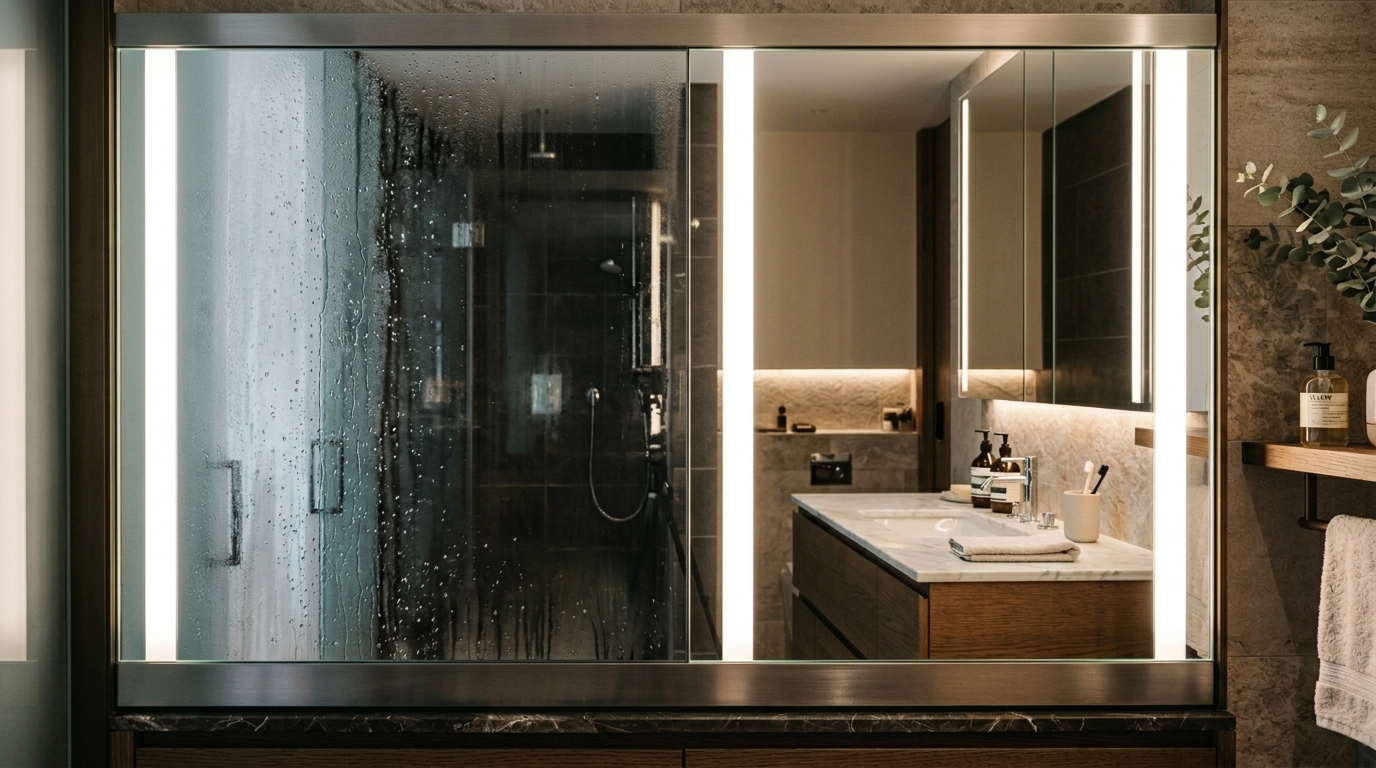
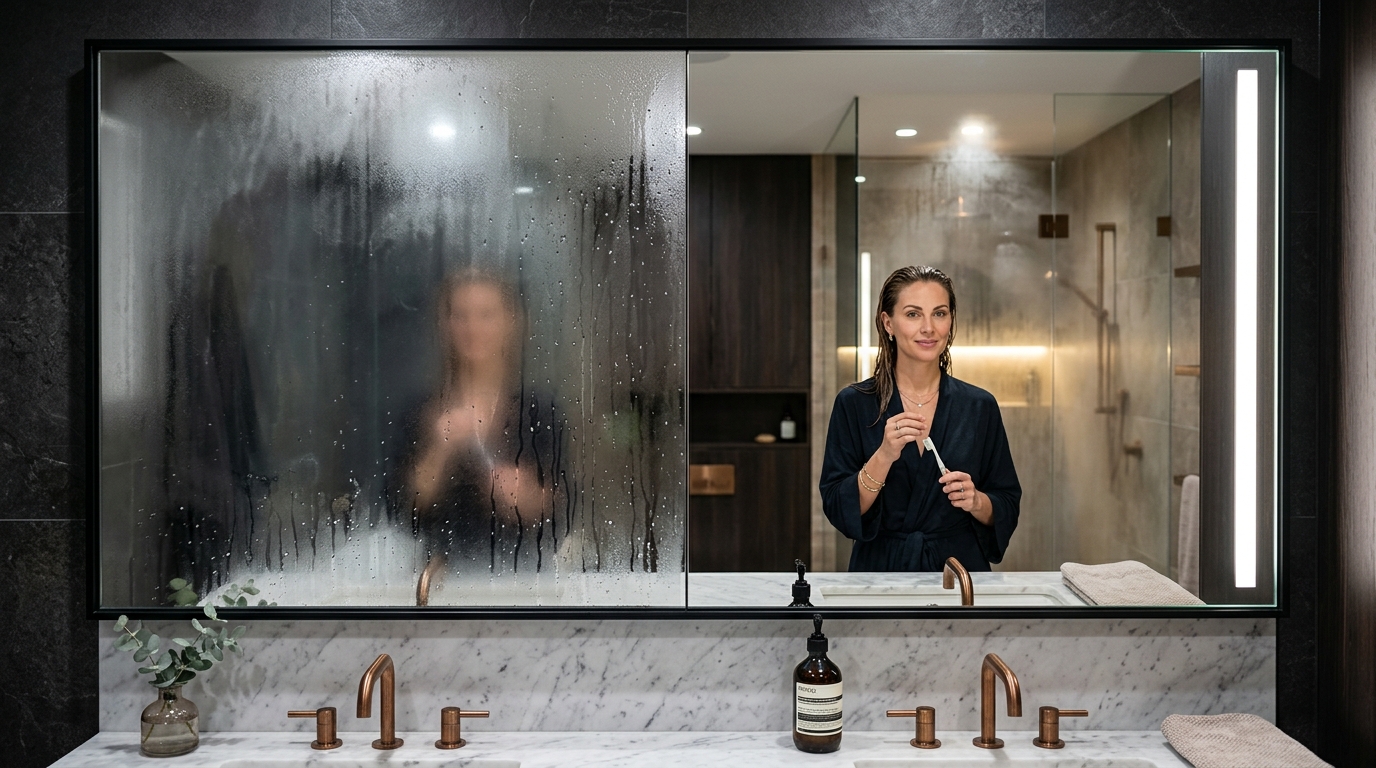
If you have ever stepped out of a luxuriously hot, steaming shower only to find your bathroom mirror obscured by a thick, wet layer of white fog, you understand the frustration of traditional glass. For decades, homeowners resorted to blasting hair dryers or wiping the mirror with a towel, which invariably leaves streaks and lint. The technological solution to this universal problem is the Anti-Fog LED Vanity Mirror. But do they actually work, and more importantly, how?
The Thermodynamics of Bathroom Fog
To understand the solution, you must understand the problem. When you take a hot shower, the air rapidly fills with super-heated, invisible water vapor. When this hot vapor hits a cold surface—like a heavy, unheated sheet of silvered glass mirror—the sudden temperature drop causes rapid condensation. The vapor instantly reverts to a liquid state, freezing as millions of microscopic water droplets onto the glass. This is the "fog".
How the Built-In Defogger Pad Operates
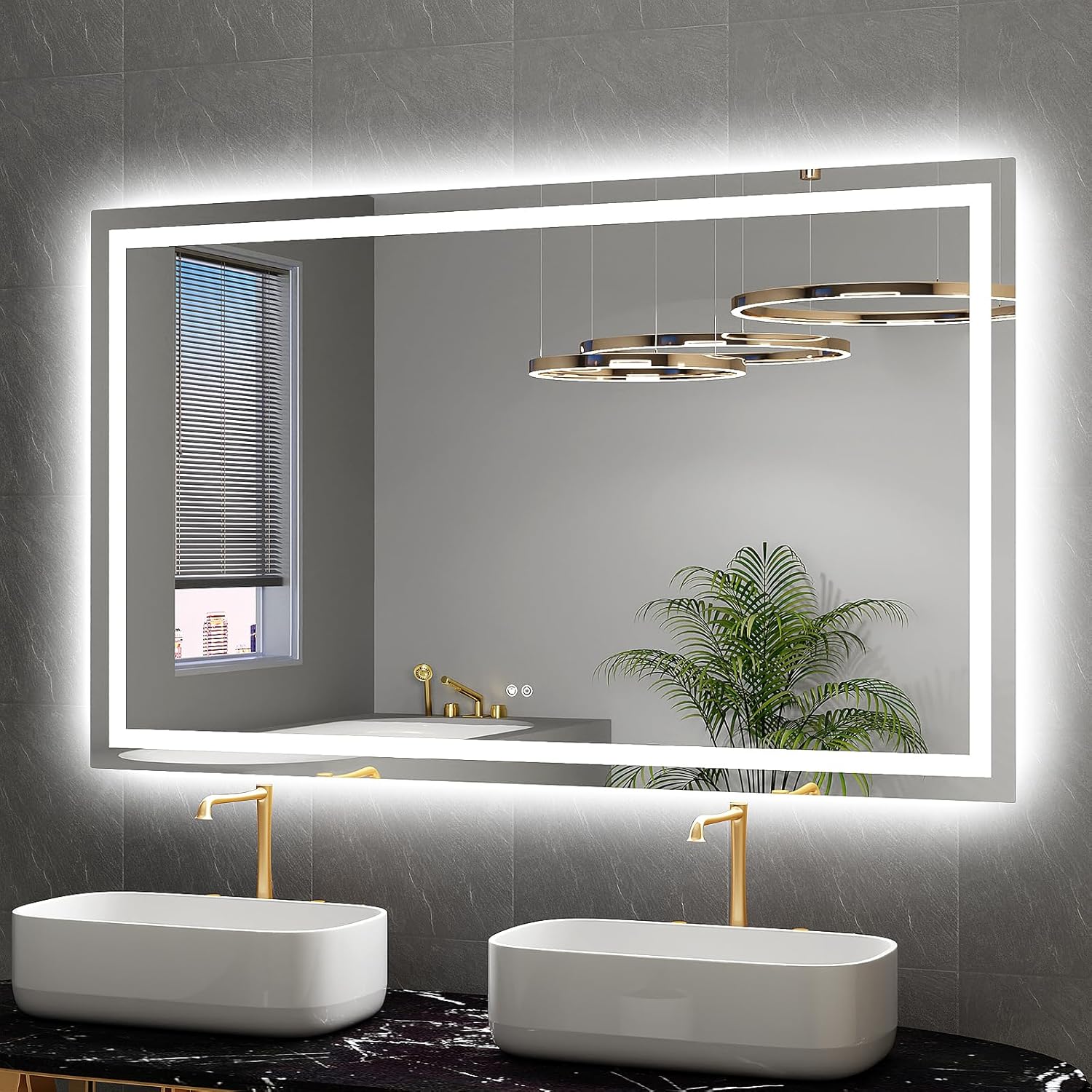
The solution engineered by companies like TWALSU is brilliantly simple. High-end LED mirrors feature a thin, ultra-safe PET electrical heating pad (often called a Demister) laminated directly to the back of the glass pane.
- Mild, Safe Heat: When activated, the pad gently warms the glass to just a few degrees above the ambient room temperature (typically around 104°F/40°C).
- Preventing Condensation: Because the glass is now physically warmer than the steam cloud floating in the room, thermodynamic condensation is impossible. The steam simply rolls past the mirror without sticking.
- Zoned Clarity: It is important to note that the heating pad usually covers the central, functional viewing area of the glass (about 70% to 80% coverage), ensuring the edges remain cool to the touch.
Energy Consumption and Hardwiring Requirements
A common misconception is that running an electrical heater behind your mirror will cause your electricity bill to skyrocket. In reality, these demister pads are incredibly low-voltage marvels, often drawing less power than a standard incandescent light bulb.
To safely install an anti-fog mirror, your contractor must provide a standard 120V electrical junction box directly behind the planned mirror centerline. High-end models, like TWALSU's architectural series, utilize dual-touch sensors on the front glass, allowing you to trigger the LED lights and the defogger pad independently to conserve energy when the shower is not running.